IT之家 8 月 22 日消息,三星 SDI 昨日向韩国交易所提交监管文件,将向三星显示出售其所持的 13,088,235 股三星显示股份。

B | 此次转让约占其总持股(39,856,654 股)的 33%,价值 4,449,999,900,000 韩元(现汇率约合 215.82 亿元人民币)。

C | WASHINGTON -- Charles and Kathleen Moore are about to have their day in the Supreme Court over a $15,000 tax bill they contend is unconstitutional.The couple from Redmond, Washington, claim they had to pay the money because of their investment in an Indian company from which, as Charles Moore, 62, said in a sworn statement, they “have never received a distribution, dividend, or other payment.”But significant parts of the story they have told to reach this point seem at odds with public records.The Moores are the public face of a high court case backed by business and conservative political interests that could call into question other parts of the U.S. tax code and rule out a much-discussed but never-enacted tax on wealth. The case is set for arguments on Dec. 5. The Moores are the latest example of plaintiffs whose lawsuits seem to simply be exercising their legal rights, but whose cases are backed by others with enormous amounts of money or a consequential social issue at stake. The Moores sought help from the anti-regulatory Competitive Enterprise Institute.Underscoring the case's importance at a recent Heritage Foundation event, lawyer Paul Clement said, "The constitutionality of a wealth tax may well be decided in the context of this case.”Details of the Moores' involvement with the company, initially called KisanKraft Machine Tools Private Limited, were first reported by Tax Notes, which caters to tax professionals. The public documents are filings with the Indian government.At issue in the case is a provision of the 2017 tax bill enacted by a Republican-controlled Congress and signed by then-President Donald Trump. The law applies to companies that are owned by Americans, but do their business in foreign countries. It imposes a one-time tax on investors' shares of profits that have not been passed along to them, in order to offset other tax benefits. The measure is expected to generate $340 billion in tax revenues.The Moores, along with the U.S. Chamber of Commerce and conservative think tanks, contend that the provision violates the 16th Amendment, which allows the federal government to impose an income tax on Americans.The $15,000 tax bill was for the Moores' share of KisanKraft's profits."If you haven’t received any income, how can you be required to pay income taxes?” Charles Moore asks in a video posted by the Competitive Enterprise Institute.But far from being a passive investor with no influence over the company, Moore, who worked at Microsoft during his career in software development, served on KisanKraft's board of directors for five years.“The story the Moores told about Charles' involvement with KisanKraft is directly at odds with the fiduciary responsibilities of an individual holding a board seat for an Indian company,” Mindy Herzfeld, a professor of tax practice at the University of Florida law school, wrote in Tax Notes.And there are other indications of Moore's more extensive involvement with KisanKraft than his testimony indicated. The company paid for his travel to India four times and he made at least two investments beyond the $40,000 stake he put up in 2006.Moore also was prepared to invest an another roughly $250,000. That money was ultimately returned by KisanKraft, along with 12% interest.One other inconsistency is that while the Moores say they jointly invested the money, only Charles Moore's name appears in company documents.The couple and their lawyers did not disclose any of that information in legal filings in three different federal courts, including the Supreme Court.“The original declaration on which the case is built is full of lies,” said Reuven Avi-Yonah, an international tax expert at the University of Michigan law school.In a brief conversation with The Associated Press, Kathleen Moore said she and her husband would not discuss the case and referred questions to their lawyers. Andrew Grossman, the Moore's lead attorney, did not respond to messages seeking comment.The omissions, along with the Moores' failure to take advantage of other legal options that would have deferred, if not eliminated, their tax liability make Avi-Yonah and other experts in international tax law suspect the case was manufactured to get at a larger issue, the tax on billionaires that has been proposed by some prominent Democrats but never enacted.A wealth tax would apply not to the incomes of the very richest Americans, but their assets, like stock holdings, that now only get taxed when they are sold. “There really was no reason for the court to take it on, other than to send a signal to warn off the Congress from passing a billionaire tax," said Steven Rosenthal, a senior fellow at the Urban-Brookings Tax Policy Center.Other provisions of the tax code could be upended by the court's decision, including measures relating to partnerships, limited liability companies and other business formations, Rosenthal said.Changes to those provisions also could affect some justices' finances. Chief Justice John Roberts holds a one-eighth interest worth up to $15,000 in an Irish partnership that owns a cottage in county Limerick, Ireland, and Justice Clarence Thomas' wife, Ginni, owns a limited liability company that generated between $50,000 and $100,000 in income last year from Nebraska real estate, according to the justices' financial disclosure forms. Two other recent Supreme Court cases advanced by conservative interests also raised questions about whether facts had been manipulated to get the disputes in front of the court. One of those involved a wedding website designer in Colorado who did not want to work with same-sex couples and a public high school football coach in Washington who wanted to pray on the field.Rosenthal said that “the ugly facts matter” and that the justices could return the Moores' case to a lower court without ruling on it.Charles Moore said in his sworn statement that he agreed to invest in the company that was being formed by his friend and former colleague at Microsoft, Ravindra “Ravi” Kumar Agrawal, because he liked the business plan and trusted his friend.“Moreover, I thought KisanKraft was formed for a noble purpose and had the potential to improve the lives of small and marginal farmers in India,” Moore said. The case had already kicked up ethical questions. Senate Democrats had asked Justice Samuel Alito to step aside from the case because of his interactions with David Rivkin, another lawyer who also is representing the Moores. The Democrats said Alito had cast doubt on his ability to judge the case fairly because he sat for four hours of Wall Street Journal opinion page interviews with an editor at the newspaper and Rivkin.Alito rejected the demands in a four-page statement issued by the court in which he said there “is no valid reason” for his recusal. ___Associated Press writer Fatima Hussein contributed to this report.___This story has been corrected to reflect that Mindy Herzfeld is a professor of tax practice at the University of Florida law school, not director of the master's program in international tax.。交易完成后,三星 SDI 在三星显示器的持股比例将从 15.2% 降至 10.2%。三星显示计划以每股 34 万韩元的价格购入这些股份,交易定于 8 月 27 日进行。

D | 三星 SDI 表示,所得款项将用于确保未来增长引擎的投资,但未披露具体分配计划。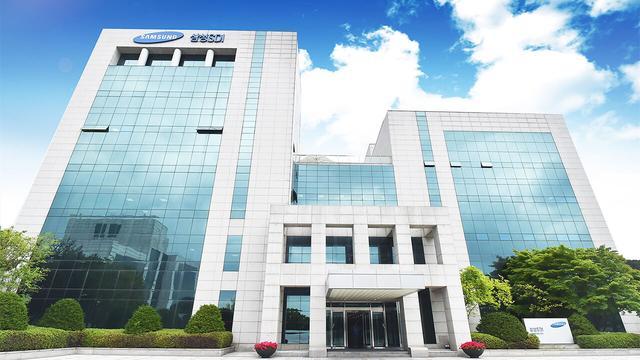 这笔资金将优先用于设施投资。其中,位于美国印第安纳州新卡莱尔的 Synergy Cells 电池工厂是重点方向之一。

E | 该工厂是三星 SDI 与通用汽车于 2024 年合资建立的项目,三星 SDI 近期已收购通用汽车在该合资企业中的全部股份(49.99%),取得完全控制权。在北美储能市场方面,三星 SDI 正积极布局。

F | 公司计划在印第安纳州工厂同时生产电动汽车电池和储能系统电池,并将与 Stellantis 在印第安纳州科科莫的合资工厂部分电动汽车电池产线改造用于储能系统生产。公司目标是在 2026 年底前实现北美地区 30GWh 的储能系统产能。此前,三星 SDI 已获得美国能源公司价值 1.5 万亿韩元(现汇率约合 72.75 亿元人民币)的储能电池供应合同。在下一代电池技术方面,三星 SDI 持续投资磷酸铁锂和全固态电池生产线,瞄准储能系统、不间断电源(UPS)、人形机器人和航空航天等领域的未来需求。公司今年第二季度实现营收 3.77 万亿韩元(IT之家注:现汇率约合 182.84 亿元人民币)、营业利润 2,038 亿韩元(现汇率约合 9.88 亿元人民币)。此次股份出售被视为三星 SDI 为中长期增长持续扩大投资的承诺。





 发表于 16:12:56

 QQ好友和群
 QQ空间
QQ空间 腾讯微博
腾讯微博 腾讯朋友
腾讯朋友 收藏
收藏 支持
支持 反对
反对
 发表于 08:29:15


