天国的阶梯
学习手记|让文旅在传承与创新中紧密相融_我的网站

一 |
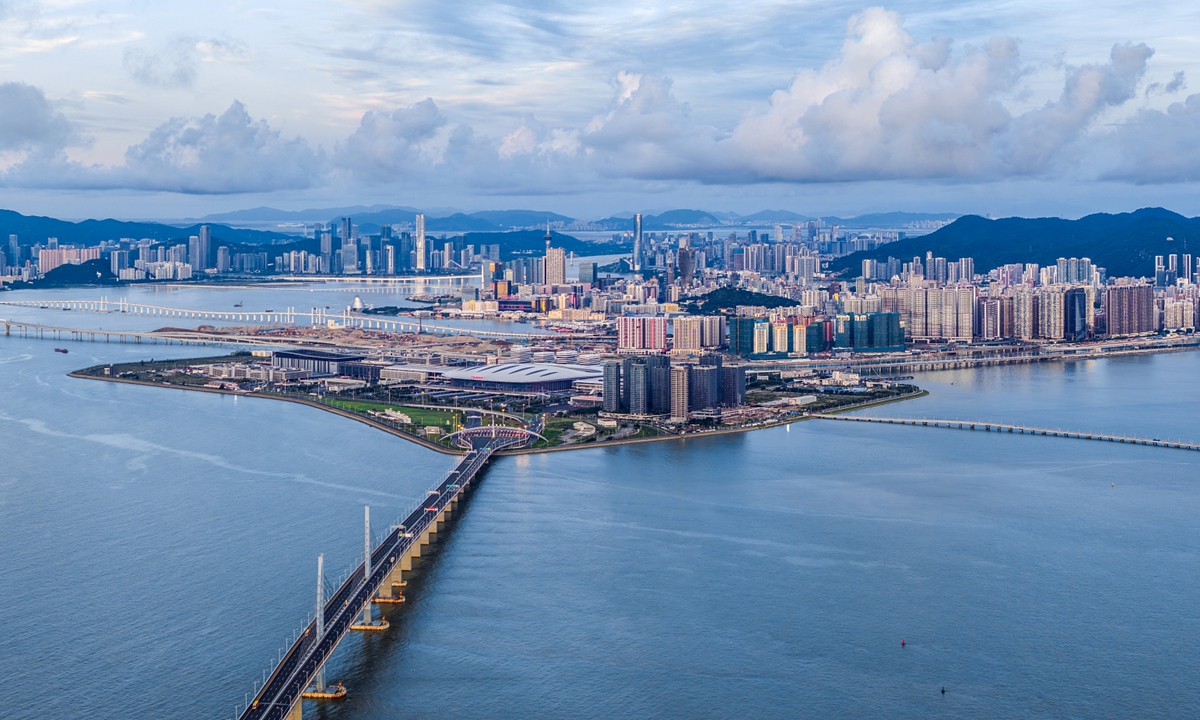
Zhuhai city in South China's Guangdong Province Photos: VCG
Speaking to the Global Times, Mexican poet Manuel Becerra said that he felt it was a form of poetic justice that a delivery rider had recently won one of China's highest literary awards.
Becerra is one of the seven writers from six APEC member economies currently taking part in the "2026 Global Writers in Guangdong Program" held in South China's Guangdong Province.
Organized by the Guangdong Provincial Writers' Association (GPWA), the program is one of the literary events held during the 2026 APEC "China Year," Xiang Xin, head of the GPWA, told the Global Times.
The program represents a two way engagement through which Chinese and foreign writers implement the Global Civilization Initiative with literature as the bridge. It is also an innovation-driven journey focused on literary creation, exploring open-ended narratives and internationally inflected expressions to write stories about Guangdong Province and China in general, Xiang said.
As the heartland of Lingnan culture, the birthplace of the Maritime Silk Road, and a pioneer of China's reform and opening-up, Guangdong is a rich literary treasure trove with vast potential for exploration, development, and creative transformation, Xiang said.
From Tangjiawan ancient town to the Hong Kong-Zhuhai-Macao Bridge, the international writers are on an immersive two-month tour that will take them to Guangdong's Shenzhen, Zhongshan, Jiangmen and Guangzhou to explore local Lingnan culture and draw inspiration for their literary creations. Lion dances, Guangzhou embroidery, Cantonese Opera, and Canton porcelain are some of the most representative Lingnan cultural symbols.
Drawing on their experiences from the tour, the seven writers will produce original literary works centered on the province, contributing to people-to-people exchanges during the APEC China Year and offering the world a richer, more multifaceted portrait of the province, according to GPWA.
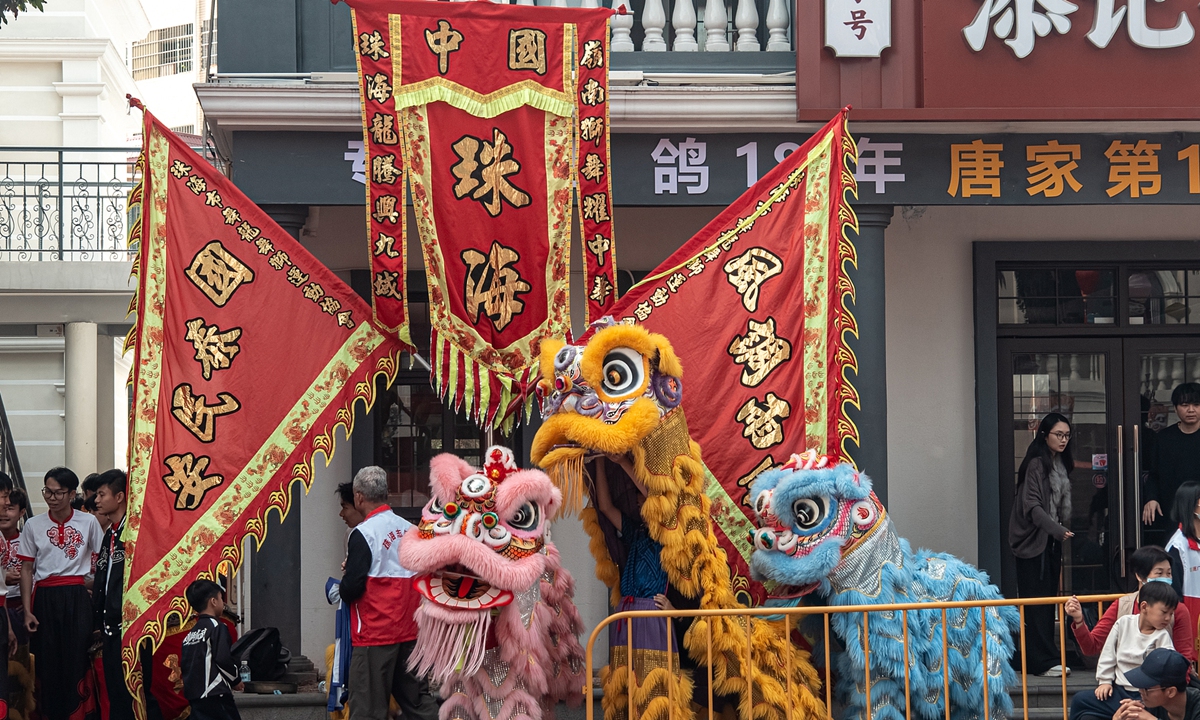
A lion dance is performed at Tangjiawan ancient town in Guangdong Province.
Like finding goldKicking off their tour in Shenzhen, the writers were amazed to learn about the city's transformation from a small fishing village into a modern international metropolis in just four decades. They were impressed by both the skyscrapers and the numerous delivery riders moving up and down the streets.
The delivery rider Becerra mentioned is 56-year-old Wang Jibing, who is known affectionately as the "delivery poet" from East China's Jiangsu Province. Wang won the 9th Lu Xun Literature Prize for his poetry collection Dichu Feixing (Low Flight) in July.
Becerra noted that immigrants from other provinces have been instrumental in shaping Shenzhen's unique identity.
"Shenzhen is a city shaped by immigrants, and I believe that migration enriches a country's culture. It creates an invaluable exchange of knowledge and personal experiences. We can look at border literature and countries where these phenomena take place. The most interesting books often come from immigrant communities," he said.
The Mexican poet said that walking through the streets of Shenzhen is like finding gold. "For writers, it is essential to remain attentive to 'certain signs' that emerge in ordinary life and to unexpected situations. As reality is filled with these 'certain signs,' it is necessary to cultivate an 'education of the gaze.'"
Peruvian poet Gian Pierre Codarlupo struck a similar tone.
"I hope to discover small stories, those of ordinary people, and to see the landscapes, to immerse myself in them. I'm interested in contemporary Chinese poetry, in addition to classical poetry. I would be delighted if this journey opened doors for future collaborations," Codarlupo told the Global Times.
The writers got an artistic view of Lingnan culture through artworks by local painters Su Hua and Lin Yong at the He Xiangning Art Museum in Shenzhen. The two are an iconic artist couple in contemporary Lingnan painting.
Becerra said what caught his attention, beyond their obvious artistic skill, was a sense of uniqueness, something new.
"I write about everything I can observe, experience and feel. Now I'm living in a country unlike any I have known before - one that, in fact, remains little explored first-hand by many people from other countries. I have stood before streets, buildings, museums, everyday scenes and events that have moved me almost to tears. As the painter Lin Yong once said, 'Here, I have cried and I have laughed,'" said Becerra.
Creative overflowPeruvian poet Codarlupo said that his experience in Guangdong is already influencing his work and he wants to be a bridge between China and Latin America.
"I have been writing poems about what I have been able to observe. So far, I have completed four articles on Lin Yong, Su Hua and the Lingnan culture. All the landscapes I have seen will appear in my work. I am overflowing with creative inspiration," he noted.
Both writers expressed a desire to translate Chinese poetry, helping bring the voices of contemporary Chinese poets to Western readers.
"I hope that people from abroad can approach Lingnan culture through poetry and art, and that they will not see Shenzhen merely as a technological city, but go beyond that," said the Peruvian writer.
Taking Mexican author Octavio Paz, who won the 1990 Nobel Prize in Literature, as an example, Becerra said that cultural exchange can inspire profound literary creation.
Thanks to his stay in India, Octavio Paz wrote one of the most fascinating Spanish works: The Monkey Grammarian. That was made possible through cultural exchange, he said.
"What I have experienced has naturally had an impact on me as a poet. If something transforms an individual, there is also the possibility that it will, as a consequence, transform their society. I hope people can see Guangdong that I experienced, as if it were a film whose full appreciation requires the use of all five senses," Becerra said.
。 去博物馆把文物“潮玩”带回家,到特色市集体验非遗技艺,在古街巷弄打卡沉浸式夜游……这个暑期,传统文化以创新姿态融入日常生活,文旅市场的蓬勃活力令人瞩目。
文化是旅游的灵魂,旅游是文化的载体。习近平总书记深刻指出:“旅游是修身养性之道,中华民族自古就把旅游和读书结合在一起,崇尚‘读万卷书,行万里路’。

二 | ”
以文塑旅、以旅彰文,是建设旅游强国的内在要求。
在地方工作时,习近平同志就提出“要把历史文化与现代文明融入旅游经济发展之中”。
《之江新语》中《发展旅游经济要坚持创新与继承相统一》一文这样指出:“加快发展旅游经济,建设旅游经济强省,必须坚持创新与继承相统一,在继承中创新,在创新中发展,不断求新、求变、求精,大力弘扬优秀的民族文化和民族精神。”
传承与创新相辅相成,既要善于因地制宜挖掘特色资源,也要善于借势借力整合要素,更要善于让传统文化焕发新的时代光彩。
党的十八大以来,习近平总书记多次在考察中对文化传承与旅游开发的辩证关系作出指示——
在山西平遥古城,强调“统筹好旅游发展、特色经营、古城保护”;在浙江绍兴浙东运河文化园,提出“要在保护、传承、利用上下功夫”;在江苏苏州平江历史文化街区,强调“要保护好、挖掘好、运用好,不仅要在物质形式上传承好,更要在心里传承好”……一声声叮嘱语重心长,彰显深厚的文化情怀与历史担当。
继承是创新的基础,创新是继承的延续。文旅融合,不断满足人们“求新、求奇、求知、求乐”的需求,“让收藏在博物馆里的文物、陈列在广阔大地上的遗产、书写在古籍里的文字都活起来”。
7月25日,“景德镇手工瓷业遗存”正式列入《世界遗产名录》。如今的景德镇,陶瓷从“观赏品”转化为“体验品”,年轻人亲手揉泥拉坯、体验陶艺制作。
2023年10月,习近平总书记来到景德镇市考察,肯定当地“严格遵循保护第一、修旧如旧的要求,实现了陶瓷文化保护与文旅产业发展的良性互动”。
生生不息的千年窑火激荡出源源不断的创新活力。正如习近平总书记所说:“每一种文明都延续着一个国家和民族的精神血脉,既需要薪火相传、代代守护,更需要与时俱进、勇于创新。

三 | ”
这些年,“文博热”火爆,“文创风”劲吹,优秀传统文化在创造性转化、创新性发展中,寻找与现代生活的连接点,丰富着全社会的历史文化滋养。
“传统与现代交融,中华文化绽放更加灿烂的光芒。”习近平总书记在2026年新年贺词中的这句话,恰是对当下中华大地上古与今交相辉映、深度融合的真切表达。
迈入“十五五”,“深化以文塑旅、以旅彰文,推进旅游强国建设”被写入国家五年规划。文旅在传承与创新中紧密相融,推动旅游强国建设迈出坚实步伐,中华文化在时代浪潮中不断焕发更加夺目的光彩。
策划:张晓松
主编:朱基钗
主笔:严赋憬
视觉:朱思明、高松龄
新华社国内部出品 【编辑:刘阳禾】。
Current article:http://aw9fhf5.focuolequzenkedenchaoruaxing.pics/il985vd/20260826/13284.html
Published on:00:55:49